NFFF Customer Update: Fish Quotas
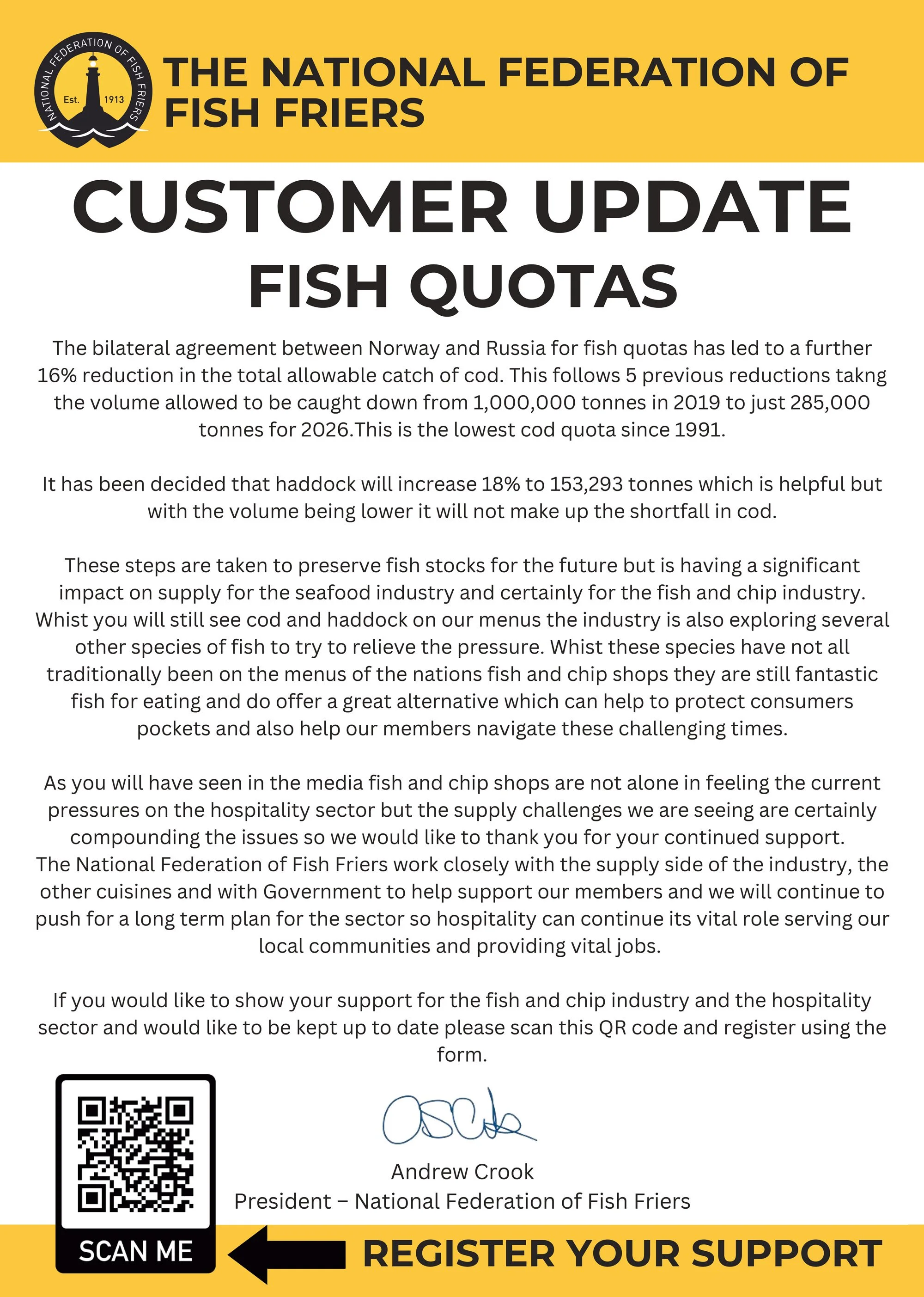
The bilateral agreement between Norway and Russia for fish quotas has led to a further 16% reduction in the total allowable catch of cod. This follows 5 previous reductions taking the volume allowed to be caught down from 1,000,000 tonnes in 2019 to just 285,000 tonnes for 2026. This is the lowest cod quota since 1991.
It has been decided that haddock will increase 18% to 153,293 tonnes, which is helpful, but with the volume being lower, it will not make up the shortfall in cod.
These steps are taken to preserve fish stocks for the future but is having a significant impact on supply for the seafood industry and certainly for the fish and chip industry. Whilst you will still see cod and haddock on our menus, the industry is also exploring several other species of fish to try to relieve the pressure. Whilst these species have not all traditionally been on the menus of the nations fish and chip shops, they are still fantastic fish for eating and do offer a great alternative, which can help to protect consumers pockets and also help our members navigate these challenging times.
As you will have seen in the media, fish and chip shops are not alone in feeling the current pressures on the hospitality sector, but the supply challenges we are seeing are certainly compounding the issues, so we would like to thank you for your continued support. The National Federation of Fish Friers work closely with the supply side of the industry, the other cuisines and with Government to help support our members and we will continue to push for a long term plan for the sector so hospitality can continue its vital role serving our local communities and providing vital jobs.
If you would like to show your support for the fish and chip industry and the hospitality sector and would like to be kept up to date please scan this QR code and register using the form.
Andrew Crook President – National Federation of Fish Friers